
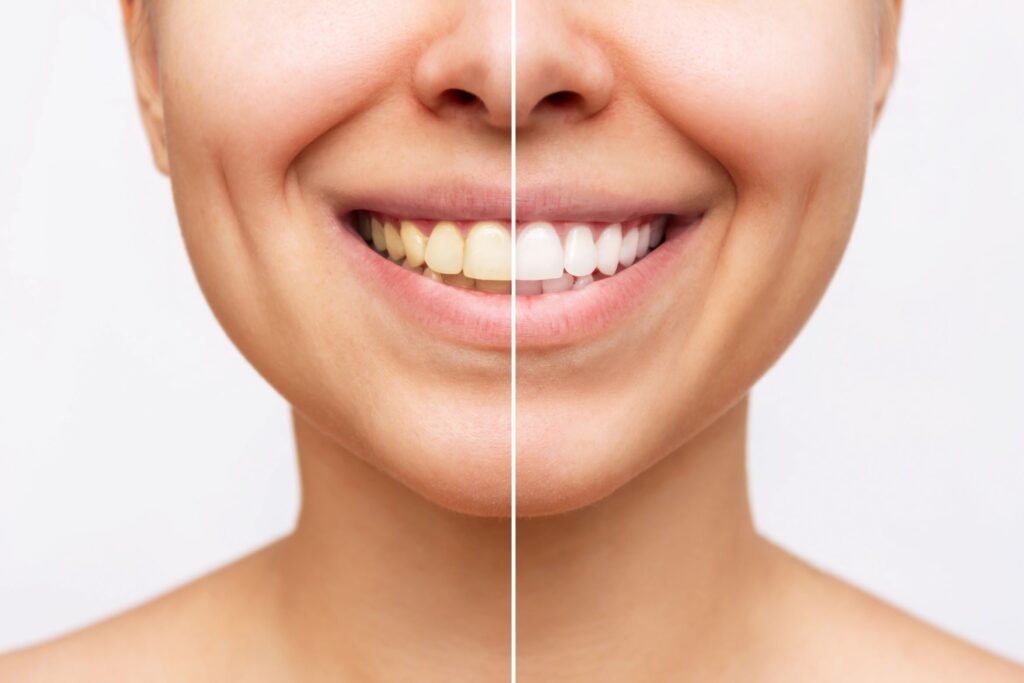
One of the first things others notice is the quality of your smile, and it’s only natural to want to make a lasting positive impression. However, if your teeth are stained or blemished, you might worry about being judged for your appearance.
Thankfully, your dentist can assess your condition and provide one or more cosmetic services, such as teeth whitening, to brighten your smile. Continue reading to learn more about the 3 different types of discoloration and how your provider might treat them!
Type #1: Extrinsic
Enamel may be the hardest substance produced by the human body, but that doesn’t mean it’s impervious to harm. Not only can it be chipped and cracked, but it is also full of microscopic pores that can absorb pigments.
For example, if you frequently consume darkly toned foods and drinks, such as tea, coffee, berries, or tomatoes, they can eventually leave your grin looking dark or dirty. Thankfully, these extrinsic stains, which form on the outermost layer of your teeth, typically respond well to topical whitening treatments. Many dentists offer in-office procedures for instant results, though they can also provide a take-home kit containing ultra-concentrated bleaches and custom-fitted application trays for an ideal outcome from the comfort of your living room.
Type #2: Intrinsic
Unfortunately, some discoloration seeps into or originates in the lower layer of dentin beneath your enamel, which is harder to treat. This can sometimes occur if stain-causing particles permeate the outer layer of your tooth and become more deeply seated. However, you might also develop blemishes due to physical trauma, genetics, or exposure to certain medications as a child, which can’t always be fixed with bleach.
Your dentist can examine your condition and recommend another solution, such as dental bonding or porcelain veneers, to upgrade the shade of your grin.
Type #3: Age-Related
Brushing and flossing twice daily at home can remove plaque that gives pigmented particles a surface to cling to, which can reduce certain types of discoloration. But it’s also possible for the aging process to tint your teeth naturally, which can’t always be prevented.
For instance, daily biting and chewing eventually wear down the blue-white translucent layer of enamel, allowing more of the yellow tone from the underlying dentin to shine through. This can make your teeth look more brown or mottled rather than bright and clean.
If you’re unsure of the culprit behind your dental discoloration, your dentist can assess your condition and provide a customized treatment plan to improve your appearance!
Meet the Author
Dr. Stacy Hebert-Schoener (Dr. Stacy) takes pride in helping her patients improve their dental health and enhance their lives. She earned her Doctor of Dental Surgery from the University of Texas Dental Branch in Houston, and today, is a member of several prestigious organizations, including the American Dental Association. She offers a comprehensive menu of services, including teeth whitening, to meet all your needs conveniently under one roof. Then, she utilizes state-of-the-art equipment to deliver more comfortable, accurate results. You can request an appointment on the website or by calling (713) 666-1597.