
Gum Disease Treatment Bellaire
Giving Your Gums Greater Protection

While it might seem as if much of the focus is on ensuring the health of your pearly whites, the truth is that without a strong foundation, your smile would fall apart. In other words, your gums serve a valuable purpose of not only protecting your roots but also helping to hold your teeth in place as well. That’s why it’s so important to keep an eye out for abnormal symptoms, like swelling and bleeding! This will ensure that we can provide gum disease treatment in the early stages.
Why Choose Stacy Hebert-Schoener, DDS for Gum Disease Treatment?
- Dedicated to Making Each Patient Feel Comfortable
- Antibiotic Treatment for Improved Recovery
- We Are In-Network with Many Dental Insurance Plans
What is Gum Disease?

It’s estimated that roughly 50% of American adults have gum disease, but what is it? In short, it’s an infection in the gums that develops due to bad bacteria. In the early stages, this can lead to swollen, tender, and bleeding gums. However, if it isn’t treated promptly, it can lead to tooth loss. So, if you suspect that you may benefit from gum disease treatment, call our office! Dr. Stacy has the solutions and technologies to give your gums the protection they need.
Symptoms of Gum Disease

Should you notice any of these signs, don’t hesitate to call and schedule an appointment:
- Bleeding, tender, and swollen gums
- Gums that appear red
- Chronic bad breath
- Gum recession that causes teeth to appear longer than before
- Loose teeth
- Pain while chewing
How Do We Treat Gum Disease?

We actually offer two different types of gum disease treatment in Bellaire! During your consultation, we will discuss each of them in-depth (and share which one we recommend for you). In the meantime, however, you can read on to learn a little bit more.
Scaling & Root Planing
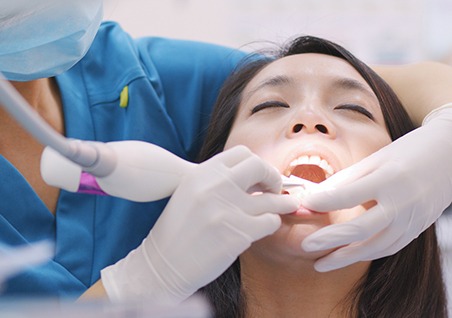
Whether it’s been a long time since your last dental cleaning, or your teeth and gums are showing signs of later stages of periodontal disease, scaling and root planing is a safe, effective treatment for reducing oral bacteria and preventing them from attacking your gingival tissue and the roots of your teeth. Often performed in conjunction with antibiotic treatment, here’s how Dr. Hebert -Schoener and the team can shield your smile against the ravages of periodontitis with this important gum disease treatment in Bellaire.
Do I Need Scaling & Root Planing?
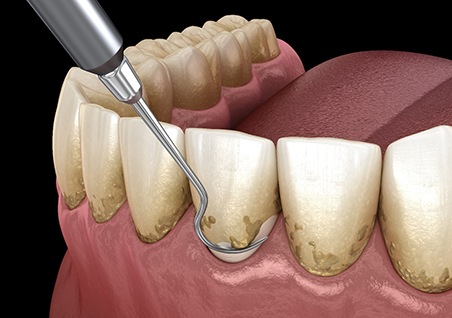
There are often many subtle indicators that your mouth could be infected with gum disease that you may not initially realize are part of a larger problem. If you’ve begun noticing troublesome symptoms like persistent bad breath, bleeding when flossing or brushing your teeth, receding gums, swelling or red gums, or visible plaque buildup on your teeth, you could be suffering from periodontitis.
While it is sometimes possible to reverse the earliest stage of periodontal disease (known as gingivitis) on your own, if your oral infection has become too far advanced, a gum disease treatment in Bellaire known as scaling and root planing may be necessary to protect your smile from further damage.
The Process of Scaling & Root Planing
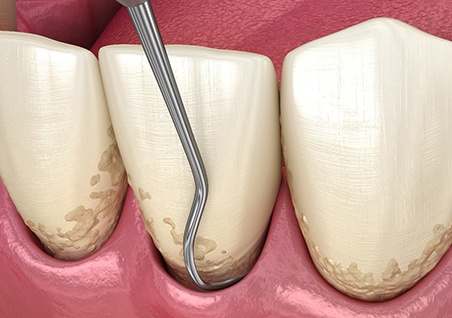
Due to the intensity of this treatment, scaling and root planing is typically a two-part process. Here’s a closer look at what you can expect from each step:
Scaling- At your first appointment, Dr. Hebert-Schoener and the team will use a dental scaler to remove all the plaque and tartar from the surfaces of your teeth, reaching as far down as your periodontal pockets (the spaces between your gums and teeth).
Planing- Then, in about two weeks, you’ll return to our office for Dr. Hebert-Schoener to remove the hardened deposits of bacteria that have accumulated on the roots of your teeth, deep below the gumline. By eliminating these, we can help prevent further infection and prevent new bacteria from attacking your gums.
Aftercare Tips for Scaling & Root Planing

Recovery from scaling and root planing often requires a break between appointments to allow your mouth to heal before moving on to the next phase. During this time, it is not uncommon to experience increased discomfort and sensitivity in the gums. Here are a few aftercare tips to help make this time easier and more comfortable:
- Be sure to rinse your gums regularly with warm saltwater. This will help reduce your risk of irritating them when brushing and flossing. To make the saltwater, just mix ¼ teaspoon of salt to every eight ounces of warm water.
- When you do brush your teeth, be very careful not to irritate the gums. If you haven’t already, switch to a soft-bristled toothbrush, and use small, slow, circular motions.
- Because your gums will be tender, you may experience heightened sensitivity to certain foods and beverages, so be sure to avoid anything too hot, spicy, acidic, or that contains alcohol until you are completely healed.
- Don’t smoke, vape, or chew tobacco during the healing process.
- Be sure to eat only a soft diet for the first 48 hours after each appointment.
- Limit strenuous physical activity directly after each treatment, as this can divert blood away from your periodontal tissue and slow down the healing process.
Antibiotic Treatment

Oftentimes, after scaling and root planing, Dr. Stacy will recommend antibiotic treatment. Using prescribed medicine that is applied to the gum pockets, it will be released over time to target bacteria in hard-to-reach places, allowing for improved healing. This additional form of gum disease treatment may not always be required, but it is highly effective in making sure bad oral bacteria are eliminated so that gums can improve over time.